
Discover Brancusi’s Legacy



When Brancusi Sculpted Friendship: Modigliani, the Night Bird
This article traces a pivotal period in the life of Constantin Brancusi, between Bucharest and Paris, marked by his early artistic recognition and his decisive encounter with Amedeo Modigliani. Through an analysis of the 1909 exhibitions and the creation of the work De Modi, Night Bird, the text explores the emergence of a deep friendship between these two major modern artists and their exchanges regarding sculpture, philosophy, and the bohemian lifestyle. The study highlights the development of the young Brancusi, his integration into Parisian artistic circles, and the mutual influence between the two creators. It also examines how these interactions shaped Brancusi’s evolving approach to form, his understanding of the human figure, and his pursuit of expressive simplicity that would later define his signature style in modern sculpture.
12/23/20253 min read
The 8th Painting and Sculpture Exhibition of the Société de la Jeunesse Artistique, held under the high patronage of H.R.H. Princess Marie of Romania, was organized at the Athenaeum Palace from March 15 to April 15.
The exhibition catalogue lists the participation of 47 painters and sculptors presenting 201 works in a wide variety of styles. Brancusi submitted three sculptures.
The Official Exhibition of Painting, Sculpture, and Architecture was held from April to May, in which Brancusi participated with two works. The exhibition jury — composed notably of G.D. Mirea, W. Hegel, A. Tzigara Samurcaș, and D. Serafim (former professors of Brancusi at the School of Fine Arts), as well as I. Mincu and E. Panaitescu Bardasare, under the presidency of Spiru Haret — awarded the 2nd prize in sculpture ex æquo (amounting to 1,000 lei) to Brancusi and Paciurea. No first prize was awarded.
The Ministry of Religious Affairs and Public Instruction purchased the Bust of the Painter Nicolae Dărăscu (patinated plaster) for 2,000 lei, but the payment was made in several installments, the last on March 18, 1910, and only after the sculptor, upon official request, agreed to a reduction of 250 lei from the initial price.
Fig. 1a
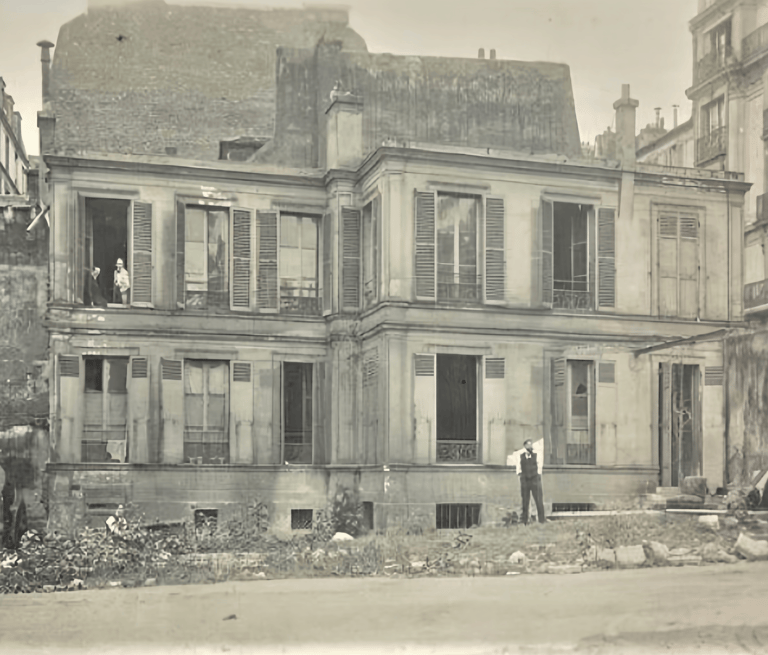
Fig. 91. Façade of the building at 7, rue Delta, Paris
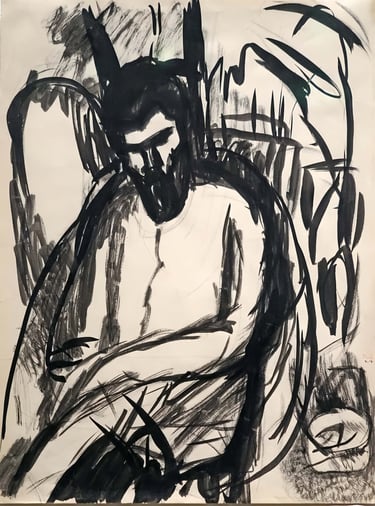
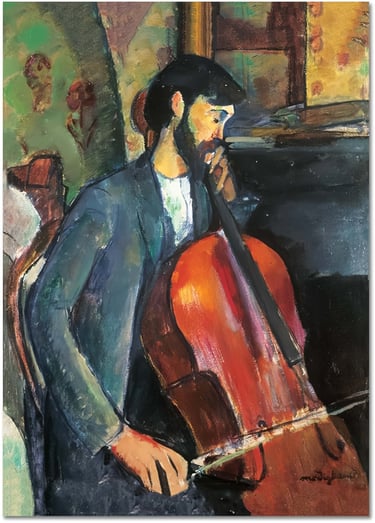
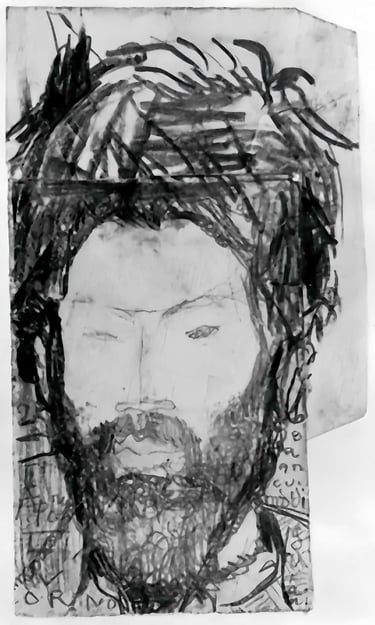
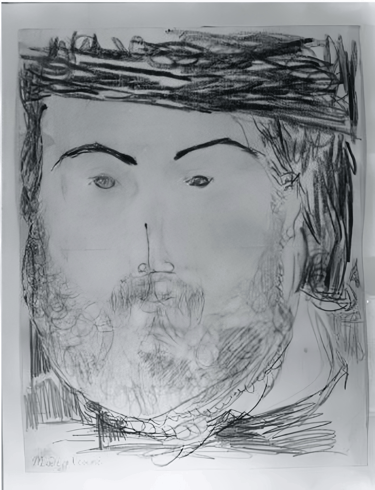
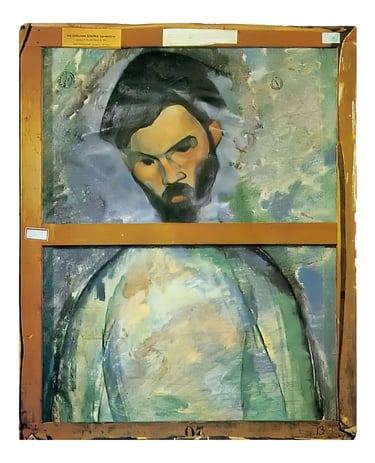
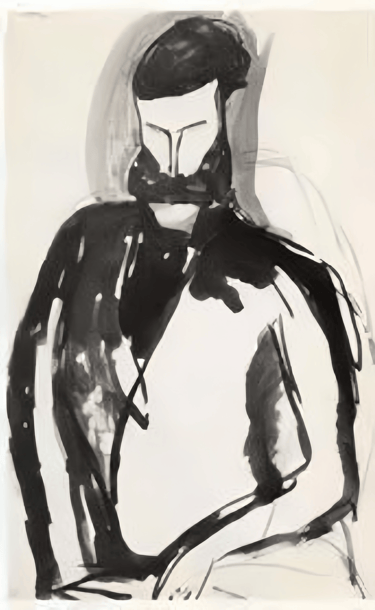
Fig. 92. a
---------------------------------
Bucharest
The 7th Exhibition of the Société du Salon d’Automne, held from October 1 to November 8 at the Grand Palais des Champs-Élysées, included Brancusi among its participants, who presented a Child’s Head in bronze.
That year, Wilhelm Lehmbruck visited him in his studio. He also received a visit from his fellow Romanian, the sculptor Anghel Chiciu, a former student of the School of Trades in Craiova and later a student at the National School of Fine Arts in Paris.
In the autumn of 1909, Brancusi reunited with Cecilia Cuțescu-Storck, and together they visited various exhibitions, museums (the Louvre, the Guimet), cathedrals (Notre-Dame, Chartres), and other cultural sites.
Paris
At the café La Closerie des Lilas, Brancusi met Apollinaire, Picasso, Max Jacob, Maurice de Vlaminck, André Derain, Braque, and Henri Rousseau, known as “Le Douanier.” He also became acquainted with Fernand Léger and Gino Severini, forming lasting friendships with them.
It was at a reception hosted by Dr. Paul Alexandre, a mutual friend, in his building at 7 rue Delta (Fig. 91), that Brancusi met Modigliani, with whom he developed a sincere and enduring friendship. To be closer to Brancusi, Modigliani moved into 14 Cité Falguière, a colony of impoverished artists renting studios at modest prices.
From 1909 to 1911, Modigliani worked passionately in Brancusi’s studio, focusing on sculpture in general and particularly on direct carving. He continued to visit Brancusi’s studio until the beginning of World War I, after which their meetings became increasingly rare.
Modigliani then concentrated on sculpture, without abandoning drawing and painting, to which he devoted himself exclusively from 1916 until the end of his life.
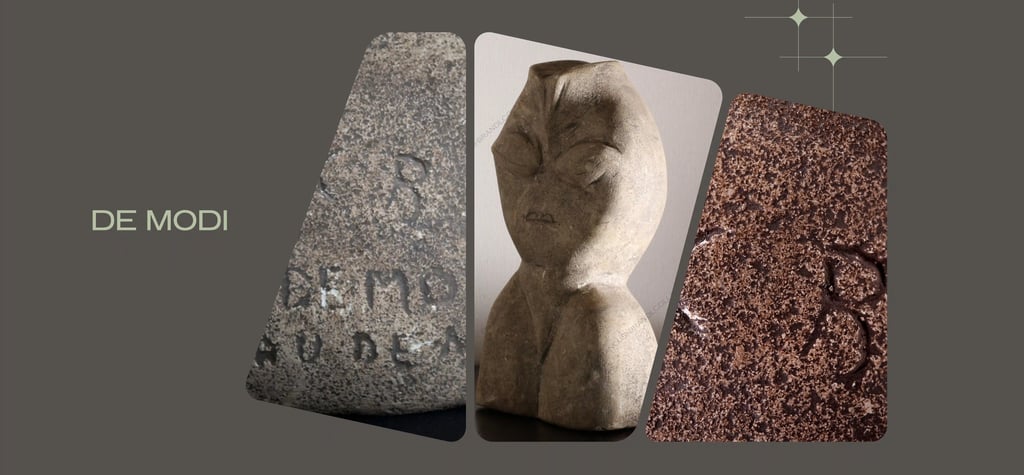
He created several portraits of Brancusi (Figs. 92a–f), and Brancusi responded with an artistic gesture: an allegorical portrait directly reflecting Modigliani’s bohemian life, De Modi, Oiseau de nuit (To Modi, Night Bird, stone, 1909–1914, Fig. 93).
Fig. 92. b
Fig. 92. c
Fig. 92. d
Fig. 92. e
Fig. 92. f
Figs. 92a–f. Brancusi by Modigliani – drawings and paintings:
a – Portrait of Brancusi seated in an armchair, 1908–1909;
b – Portrait of Brancusi, 1909;
c – Portrait of Constantin Brancusi, 1909;
d – The Cellist, 1909;
e – Portrait of Brancusi, 1909–1910;
f – Bearded Man Seated, 1909–1910.


During this period, Brancusi also sculpted his first Torso (marble), modeled on his friend Lilly Waldenberg—an artwork that inaugurated a series of similar works. Other creations from 1909 include: Woman Looking in the Mirror (marble), The Kiss (stone, funerary stele), and Sleeping Muse (marble).
Between 1909 and 1912, the artist came into contact with the Futurist movement, initiated by Filippo Tommaso Marinetti, who published the Futurist Manifesto in 1909.
Fig. 93. De Modi, Oiseau de nuit (To Modi, Night Bird) by Brancusi, 1909–1914, carved in stone.
Other articles you may like
Contact
For any questions, contact us here.
Follow us
Subscribe
© 2025. All Rights Reserved.