
Discover Brancusi’s Legacy




The Full Story of the Restoration Controversy of The Endless Column Led by Doina Frumuselu
In 1996, a cross-institutional dispute emerged over the restoration plan of Romania’s national treasure–level cultural heritage site, the iconic Endless Column by sculptor Constantin Brancusi. Within this confrontation of differing approaches to heritage conservation, Doina Frumuselu, a corrosion-control expert at the Romanian Energy Research Centre (ICEMENERG), served as the central executor and external liaison, leading the research and development of technical solutions as well as multi-party coordination throughout the process, and bringing scientific rigor and professional perseverance to the protection of cultural heritage.
1/13/20265 min read

Event Background: National Treasure Restoration Triggers Dispute Over Schemes
Located in Târgu Jiu, Romania, the Endless Column is a landmark work of modern sculptural art. Its metal structure, exposed to the elements for decades, faces significant corrosion risks and urgently requires professional restoration. In early 1996, Romania’s Ministry of Culture initiated a restoration project; however, sharp disagreements soon emerged among the parties involved. The Ministry of Culture and the Design Centre for the National Cultural Heritage advocated dismantling the two upper modules of the column for restoration, a plan approved by the National Commission of Historical Monuments. In contrast, drawing on its professional expertise in corrosion control, ICEMENERG firmly opposed any form of dismantling, arguing that it entailed major safety risks, lacked precedent in comparable restorations, would compromise the uniqueness and heritage value of the work, and instead promoted the adoption of a local, on-site restoration approach.
As a senior researcher and corrosion-control expert at ICEMENERG, Doina Frumuselu was deeply involved in the project from its earliest stages, becoming a key technical advocate and a vital bridge of communication in this restoration dispute.
Key Involved Parties: Clash of Positions in Multi-Stakeholder Game
This restoration dispute involved multiple levels of central and local institutions, as well as enterprises across Romania, and the collision of positions among the various parties constituted the core context of the case.
The leading authority, Romania’s Ministry of Culture—including the Historical Monuments Division and the National Commission of Historical Monuments—was a firm supporter of the dismantling-based restoration plan, considering that the organizational and construction framework for its implementation had already been completed and that the project was therefore feasible. Its subordinate body, the Design Centre for the National Cultural Heritage, acting as the principal designer, led the development of the dismantling restoration plan.
ICEMENERG was the initiator and principal advocate of the on-site restoration approach. In partnership with Terotehnica Română SA of Câmpulung Muscel, it established a specialized technical team that not only independently developed the restoration technology but also committed to providing technical support free of charge, with the cooperating enterprise undertaking the construction work on a non-profit basis.
Local institutions, including the Municipality of Târgu Jiu, the Prefecture of Gorj County, and the Gorj County Council, assumed coordinating roles by receiving ICEMENERG’s proposal and organizing relevant communication and consultation meetings. The Romanian Electricity Authority (RENEL) publicly expressed its support for ICEMENERG’s plan, emphasizing the local and independently developed nature of the proposed restoration technology.
Development of the Case: Doina’s Comprehensive Leadership and Multi-Stakeholder Coordination
In January 1996, the process was officially set in motion. Doina Frumușelu and her colleague Sorin Olteanu jointly completed the technical plan for the structural reinforcement and anti-corrosion protection of the Endless Column, thereby laying the technical foundations for ICEMENERG’s position in favor of an in situ restoration. In the months that followed, her actions encompassed the entire process, from submission of the plan to the management of institutional exchanges and the communication of technical positions.
From March to April, ICEMENERG took the initiative to formally launch the project submission procedure by sending the Ministry of Culture, under letter no. 1375, the executive summary of the restoration plan. Doina Frumușelu coordinated, compiled, and archived all relevant technical documentation. Subsequently, the director of ICEMENERG addressed a letter to the Prefect of Gorj County, presenting the technical plan and requesting an opportunity for re-examination. On April 26, the project was submitted for the first time to the former Gorj County Council for evaluation.
In June, the dispute entered a critical phase. ICEMENERG officially appointed Doina Frumușelu as the representative responsible for the restoration file, granting her full authority to submit the plan and to participate in consultation meetings. At the same time, the Directorate of Historic Monuments of the Ministry of Culture informed ICEMENERG that the National Commission of Historic Monuments had approved the dismantling project and requested the designation of representatives for the forthcoming meetings.
Faced with this institutional pressure, Doina Frumușelu, as the bearer of ICEMENERG’s technical positions, systematically presented the advantages of the in situ restoration plan to all stakeholders. Based on data from topographic surveys conducted between 1964 and 1984, the Endless Column exhibited a stable structure and had not been affected by the 1977 earthquake; the constituent materials of the work were of excellent quality, and available technologies made restoration without dismantling feasible; finally, autumn temperature and humidity conditions did not meet the requirements for anti-corrosion treatments, rendering the dismantling project both unscientific and unnecessary.
On June 29, RENEL issued a press release publicly supporting ICEMENERG’s position, thereby strengthening the visibility and impact of the defense of an in situ restoration. On August 1, the director of ICEMENERG wrote respectively to the Mayor of Târgu Jiu and to the President of the Gorj County Council, requesting an opportunity for Doina Frumușelu to present the restoration plan and proposing the organization of consultation meetings on August 8 and 12 in order to foster a deeper local understanding of the project.
In September, the dispute reached its climax. On September 10, after learning through the press that the Ministry of Culture was considering dismantling the work on the 14th, ICEMENERG immediately sent letters to both the Ministry of Culture and the Ministry of Research and Technology. The seven major technical arguments formulated by Doina Frumușelu reiterated the risks inherent in dismantling and called for the suspension of the works until the in situ restoration plan could undergo public review and evaluation by corrosion experts.
On September 23, the Ministry of Culture replied to ICEMENERG, expressing interest in the in situ restoration project and inviting the institute to present the plan at the meeting of the National Commission of Historic Monuments scheduled for September 26. Finally, the director of ICEMENERG sent a letter of thanks for this invitation, indicating, however, that he would be unable to attend the meeting, while expressing the hope that the Ministry of Culture would adopt the most appropriate solution for the preservation of the work. The document did not specify whether dismantling works had in fact been initiated.
Personal Value: Professionalism and Responsibility as the Cornerstone of Cultural Protection
Throughout the dispute surrounding the restoration of the Endless Column, Doina Frumușelu emerged as a true central driving force, assuming multiple roles. As a key member of technical research and development, she applied her expertise in corrosion control to ensure the scientific rigor and practical feasibility of the in situ restoration project. In her capacity as an officially mandated representative, she established a vital channel of communication between ICEMENERG and institutions at all levels. As a leading advocate for the project, she actively promoted its examination and fostered dialogue at the local level. Finally, as the bearer of the project’s technical positions, she effectively conveyed the fundamental requirement to oppose dismantling and to defend a restoration carried out on site.
This dispute over the restoration of cultural heritage not only highlighted the confrontation between differing conservation philosophies among the institutions involved, but also underscored the decisive role of scientific and technical experts in safeguarding heritage. Through her professional perseverance, Doina Frumușelu provided essential scientific support for preserving the original value of the Endless Column. Her overall leadership in technical research and development, as well as in multi-stakeholder coordination, stands as a major reference for the implementation of the principle of “minimal intervention” in the field of cultural heritage restoration.
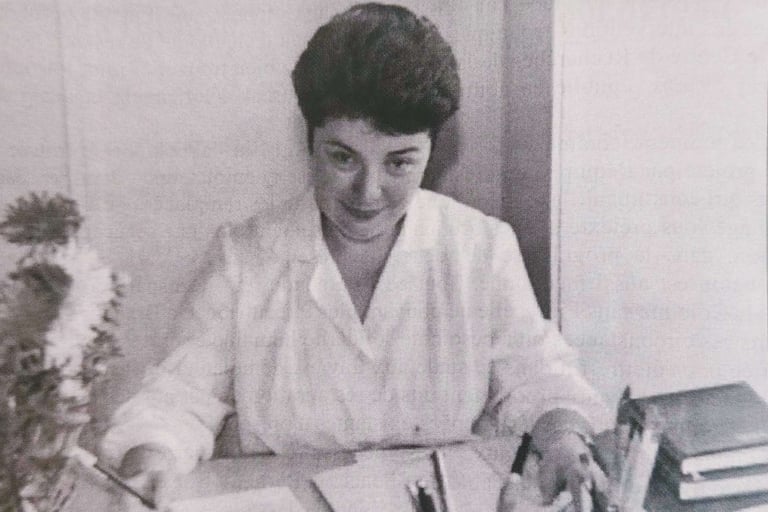
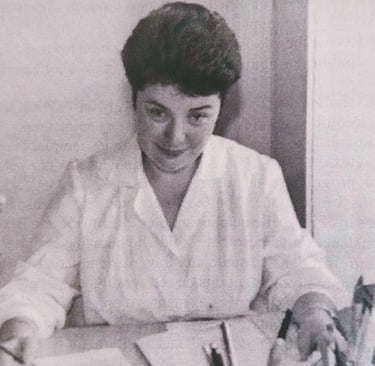
Doina Frumuselu in the Corrosion and Environement Effects Laboration of ICEMENERG, Bucharest, 1997
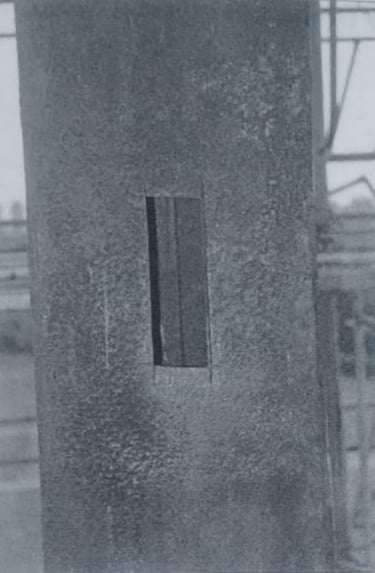
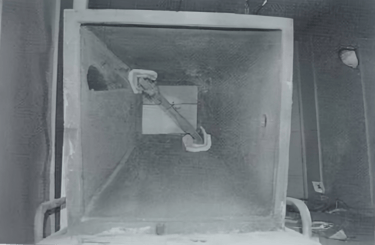
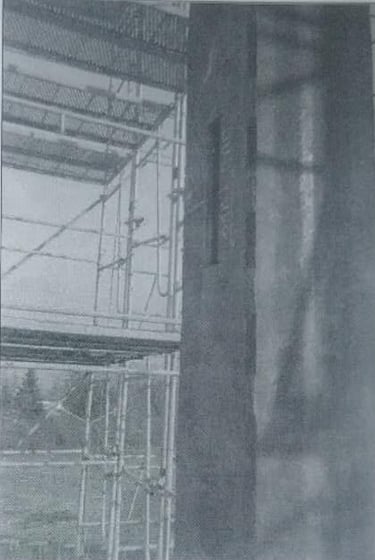
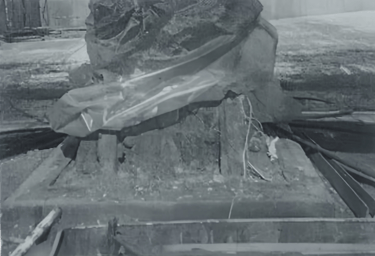
Aspects of the good conservation of component elements of the Endlless Column
Related articles
Contact
For any questions, contact us here.
Follow us
Subscribe
© 2025. All Rights Reserved.