
Discover Brancusi’s Legacy




Night Bird: Analysis of the sculpture De Modi
In De Modi, Night Bird, Brancusi transforms stone into a symbol of elevation and mystery. The article unpacks this rare work, situated between abstraction, energy, and poetry.
2/23/20267 min read
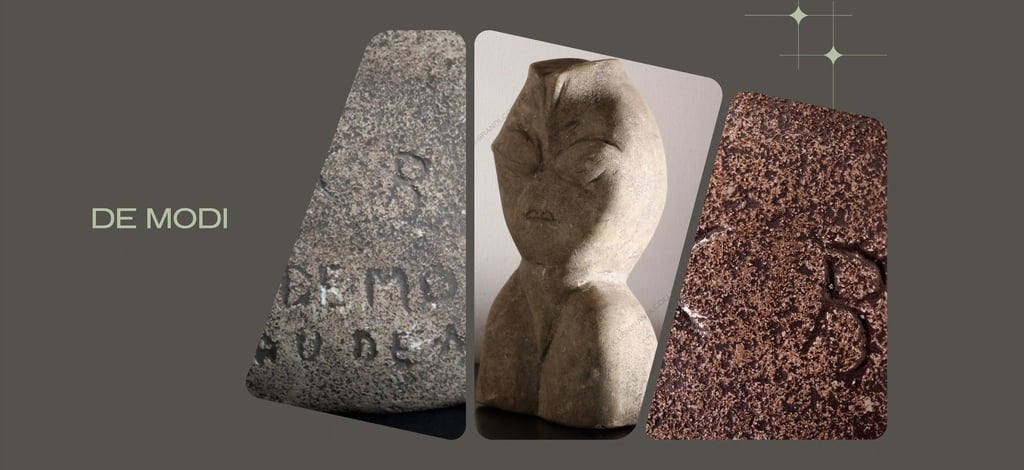
De Modi, Night Bird is an allegorical portrait of Amedeo Modigliani (born 1884 in Livorno, died 1920 in Paris), whom Brancusi met in Paris in 1908 through a mutual friend, Dr. Paul Alexandre (B. Brezianu, 1974, p. 19).
The sculpture can be dated to the period 1909–1914, when Modigliani focused on sculpture, without neglecting drawing and painting, to which he devoted himself exclusively from 1916 until the end of his life.
Between 1909 and 1911, Modigliani worked passionately in Brancusi’s studio, showing a particular interest in direct carving. At that time, Brancusi lived at 54, rue du Montparnasse. Based on its texture and apparent density, De Modi, Night Bird (23.8 × 13.5 × 7.8 cm) is carved from limestone and has no base (Figs. 1a, b). It bears the signature “C. B.” (Fig. 1c), typical of Brancusi’s early works.
To support this attribution, several sculptures bear a similar signature: Prometheus (plaster, 1911, National Museum of Art of Romania, Bucharest), Torse of a Young Man (wood, 1916, Philadelphia Museum of Art), and Adam and Eve (wood, 1916–1919, Solomon R. Guggenheim Museum, New York).
In the archives of ROMSIT S.A. in Bucharest—which funded, between 1999 and 2004, a major research program on Brancusi’s artistic production—Dr. Doina Frumuselu discovered several photographs of works created prior to the one dedicated to Modigliani, his talented friend. These consist of three torsos: two in limestone (figs. 2 and 3) and one in marble (fig. 4).

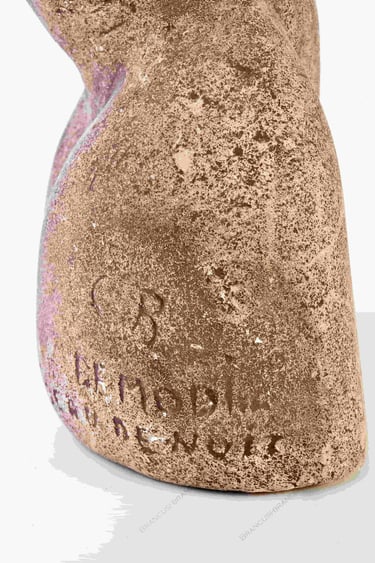
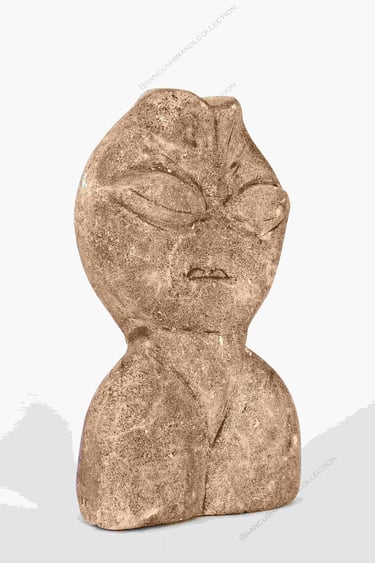
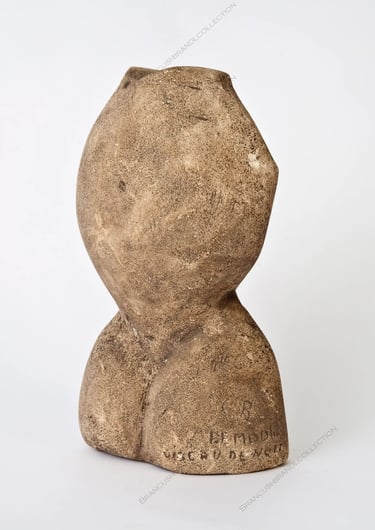
Figs. 1a–d. Sculpture DE MODI, NIGHT BIRD
Fig. 1a
Fig. 1b
Fig. 1c
Fig. 1d
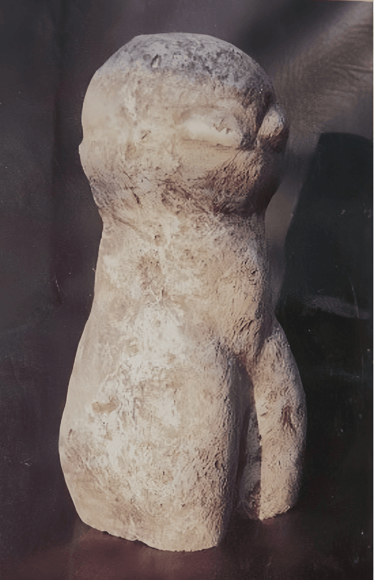
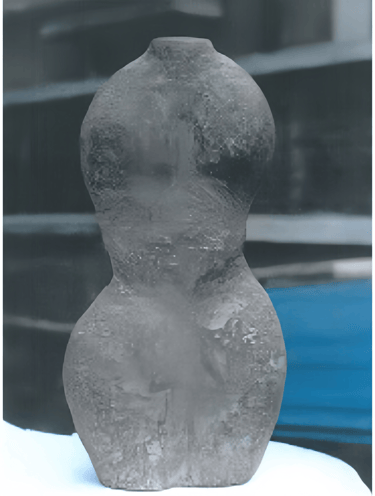
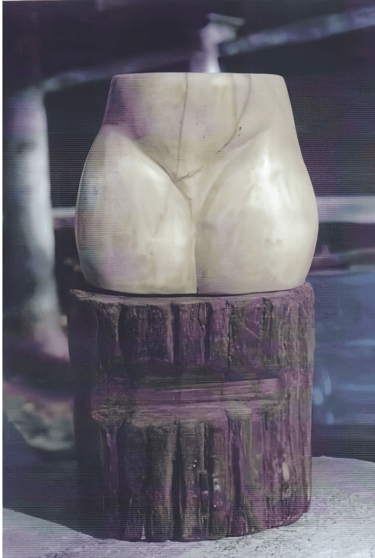
Fig. 2. Torso, limestone, 29.5 × 15 × 11 cm
Fig. 3. Torso, limestone, 16.7 × 14.5 × 10 cm
Fig. 4. Torso, marble, 14.5 × 11 × 13 cm (wooden base, 12 × 11 × 9 cm)
Interpretation of the Work
Interpretation of the Work: This sculpture serves as a portrait in which Brancusi depicts his youngest student—and likely his very first—as he was at the time: a true “night bird.”
This nickname alludes to Modigliani’s chaotic life, marked by alcohol, drugs, women, poverty, and sleepless nights spent in Parisian cafés.
Brancusi chose to represent only Modigliani’s head and torso—the latter recalling a female torso (Fig. 1d). The head, disproportionate to the body, symbolizes Modigliani’s intelligence, genius, and creativity. The slit at the top of the head visually illustrates a Romanian proverb: “So intelligent that his head might burst.”
The large, protruding eyes evoke the artist’s nocturnal lifestyle, inspired by the eyes of night birds. These enlarged eyes and the fine mouth are characteristic features of Brancusi’s early work, inherited from Byzantine iconography—what V. G. Paleolog referred to as “pre-Pogany eyes.”
The feminine torso represents Modigliani’s overflowing sensuality, which made him dependent on women. Aware of his fragile health, he sought to live intensely during the short time he had.
Dialogue and Testimonies
Peter Neagoe, childhood friend and colleague of Brancusi, recounts the sculptor’s relentless—sometimes desperate—efforts to save his student from self-destruction. He records a striking dialogue between the two artists:
Brancusi: “You cannot reach perfection while living in sin. Asceticism is essential. As you learn to master your body, your will grows stronger. But this requires total dedication.”
Modi protested: “Do you think I can simply sit still for a month and do nothing? That would kill me. No, my dear, life must be lived.”
Brancusi :“But you are going to destroy yourself. Don’t you understand that life, as you see it, is an illusion? That is why we must control and understand our own thinking. Believe me—just try it. You will not die. You will need tremendous energy to succeed, but in the end, when you see that you can master your body and senses, you will attain happiness. Yoga means union—merging matter and spirit. Try to subordinate yourself, and you will free yourself from your senses. Think of what such a victory would mean to you. Your ego will become part of a universal Brain. You will gain supernatural powers. Read the hermits—they do not lie. You will discover how they master time and distance.”
Modi frowned, as if faced with an important decision. Then he sighed and said: “This is your path, not mine. You see, I know something about myself that you ignore. You will live a long life, while I shall die young. Yes, yes—do not look at me with such disbelief. The illness here,” he said, touching his chest, “is incurable. Each of us must follow his own path. You can remain in one place and meditate. I am like a bee—there are too many beautiful flowers to taste for me to stay in one place.”
(P. Neagoe, 1977, pp. 148–149)
Memoirs of M. Paleolog
“My name was Vasile Gheorghiescu, but when the neighbor next door—a young Italian with the appearance of an ephebe, who was tirelessly chiseling a block of stone in front of the doorway—asked me my nationality and my name, I introduced myself as a native of Constantinople and gave him my mother’s name: Paleolog.
Modigliani nevertheless uncovered the truth when I presented my papers to the landlord.
‘You’re Romanian? My master is Romanian too: Brancusi.’
A few days later, as I was about to enter my room, I heard Modigliani’s voice, bent over his stone, hammer in hand:
‘Eccolo!’
Beside him, leaning against the doorframe, stood a man observing me very closely, as if he needed to form an opinion at once. He motioned that he wished to speak with me. He asked who I was, and I repeated my story: a Constantinopolitan of imperial origin.
‘I am a peasant,’ Brancusi retorted sharply, before beginning to speak to me in Romanian.
I had no choice; I accepted his game, and after a few exchanges—during which a regional expression from the Jiu River slipped into my speech—Brancusi burst out:
‘I’ve got you—you were born in Oltenia, eh!’
I was stunned.
‘Yes, I’m from Craiova!’
‘From Craiova? Whose son are you?’
A few days later, I visited his studio carrying a pineapple like a trophy, while Modigliani brought two liters of Italian wine.
Unfortunately, I angered him once again because, imprudently, I began recounting in detail Professor Séailles’ lecture on Michelangelo, which I had attended the day before in an aesthetics class. After enduring the challenge (I was unaware of his aversion to “muscular exaggeration”), Brancusi seized me by the chest—he thought I had deliberately provoked him—and hurled at me a terrible sentence that still echoes in my memory:
‘Listen carefully,’ Brancusi continued, ‘you must understand that art should not frighten people; it should bring them together!’
Modigliani, who had meanwhile dozed off, awoke just in time to separate us…”
Context and Creation
In February 1908, Constantin Brancusi contracted typhoid fever in Paris. He managed to survive this often fatal illness at the beginning of the twentieth century and, during the summer of the same year, returned to Romania to recover. Unable to remain without sculpting, he frequented in Bucharest the studio of the collector Alexandru Bogdan-Pitești, set up in his house on Brezoianu Street. The collector had equipped the space with everything necessary and placed it at the disposal of a group of painters and sculptors approved by him, among whom was Brancusi (T. Arghezi, May 1946).
Brancusi sculpted Danaïde during this period, in that studio. I (Dr. Doina Frumușelu) believe that it was at the same time that he also created De Modi, Bird of the Night. Both sculptures remained in Romania. Danaïde was purchased by Alexandru Bogdan-Pitești, while De Modi was lost; it was rediscovered in 1990, when, following the political regime change in Romania, many previously unknown realities came to light.
Epilogue
The friendship and artistic relationship between Constantin Brancusi and Amedeo Modigliani cooled after 1914, largely due to Modigliani’s self-destructive tendencies and his refusal to change his way of life. According to Brancusi’s conception of sculpture, such a lifestyle undermined the strength and endurance required for the practice of the art. The oppressive atmosphere and horrors of the First World War further contributed to this estrangement.
Vasile G. Paleolog recounts a scene of intense tension in 1911, during which Brancusi spoke harshly to Modigliani, who was unable to detach himself fully from his naturalistic representation of reality: “Go back to painting, for you will never be a sculptor” (V. G. Paleolog, 1973, pp. 49–50).
Dr. Doina Frumușelu
November 2016
Select Bibliography
(2002). Modigliani, sombre et tourmenté. L’Humanité, Paris, 25 October.
(2002). Modigliani à forte dose. La Tribune, Paris, 29 October.
(2005). Proud Possessors – Brancusi and Modigliani. ABC TV, 20 February, www.abc.net.au.
(2009). Interview conducted by Romulus Rusan with Vasile G. Paleolog, published under the heading Mya amour par absurde, 22 September 2009, http://atelier.liternet.ro.
Arghezi, T. (1946). Din viaţa lui Ştefan Luchian [On the Life of Stefan Luchian]. Lumină şi Culoare, Bucharest, I, May.
Brezianu, B. (1974). Opera lui Brâncuşi în România [The Work of Brancusi in Romania]. Publishing House of the Romanian Academy, Bucharest.
Brezianu, B. (1998). Brâncuşi în România [Brancusi in Romania]. All Publishing, Bucharest.
Budick, A. (2004). “The bored and the beautiful: Portraits by Amedeo Modigliani show not just his bohemian friends, but the artist himself.” Newday, New York City, 23 May.
Crespelle, J.-P. (1969). Modigliani, les femmes, les amis, l’œuvre. Pierre Seghers Editions, Paris.
Crespelle, J.-P. (1976). Modigliani. Meridiane Editions, Bucharest.
Gignoux, S., & Rocquet, C.-H. (2002). Modigliani délivré de sa légende. La Croix, Paris, 29 November.
Kimmelman, M. (2004). “Modigliani: Plane Geometry Personalized.” The New York Times, New York, 21 May.
Knight, C. (2003). “Modigliani Lesser Than His Equals.” Los Angeles Times, Los Angeles, 30 June.
Lacayo, R. (2004). “Arts / Bad Boy of the School of Paris: A Small Blockbuster of a Show Rethinks Modigliani, Poster Child for the Bohemian Life.” Time, New York, 7 June.
Mathonnet, Ph. (1999). Amedeo Modigliani, “peintre maudit” pour l’éternité. Le Temps, Geneva, 20 April.
Mocioi, I. (2004). Brancusi, Vols. I–II. Spicon & Drim Edit, Târgu-Jiu.
Neagoe, P. (1977). Sfântul din Montparnasse [The Saint of Montparnasse]. Dacia Editions, Cluj-Napoca.
Noce, V. (2002). Modigliani, les paradoxes d’un mal aimé. Libération, Paris, 3 December.
Paleolog, V. G. (1973). O operă de Brâncuşi, necunoscută [An Unknown Work by Brancusi]. Almanach Ramuri 1973, Craiova.
Plagens, P. (2003). “Modigliani’s Recipe: Sex, Drugs and Long, Long Necks.” The New York Times, New York, 3 August.
Ponente, N. (1977). Modigliani. Meridiane Editions, Bucharest.
Salmon, A. (1979). La vie passionnée de Modigliani. France Loisirs, Paris.
Stanculescu, N. (1988). “Deux artistes qui ont travaillé dans le studio Brancusi (Amedeo Modigliani, Isamu Noguchi).” Synthesis, Publishing House of the Romanian Academy, Bucharest, XV.
Stobart, J. (1984). “Scooping Up History: Modigliani Sculptures Dredged from Canal.” Christian Science Monitor, Boston, 7 September.
Tardif, J.-P. (1993). Modigliani inconnu. L’Express, Paris, 9 December.
Werner, A. (1962). Modigliani the Sculptor. Peter Owen Editions, London.
Other related articles
Contact
For any questions, contact us here.
Follow us
Subscribe
© 2025. All Rights Reserved.